Armed Conflict
Just Security’s expert authors provide analysis on the legal, policy, and strategic dimensions of armed conflict, including the Russia-Ukraine war, the Israel-Hamas war, counterterrorism operations, conflicts in the Middle East and North Africa, and other armed conflicts across the globe, with a focus on international humanitarian law, war crimes and accountability, mitigating and remedying civilian harm, and the humanitarian impacts of warfare.
Highlights:

Just Security’s Israel-Hamas War Archive
Just Security's collection of more than 110 articles covering the Israel-Hamas War and its diplomatic, legal, and humanitarian consequences.

Just Security’s Russia–Ukraine War Archive
A catalog of over 100 articles (many with Ukrainian translations) on the Russia Ukraine War -- law, diplomacy, policy options, and more.

Collection: Iran, Israel and the United States at War (2025-2026 Operations)
Experts analyze the US-Israel Iran military conflicts - covering nuclear diplomacy; strategic, security, and regional implications; and domestic and international law.
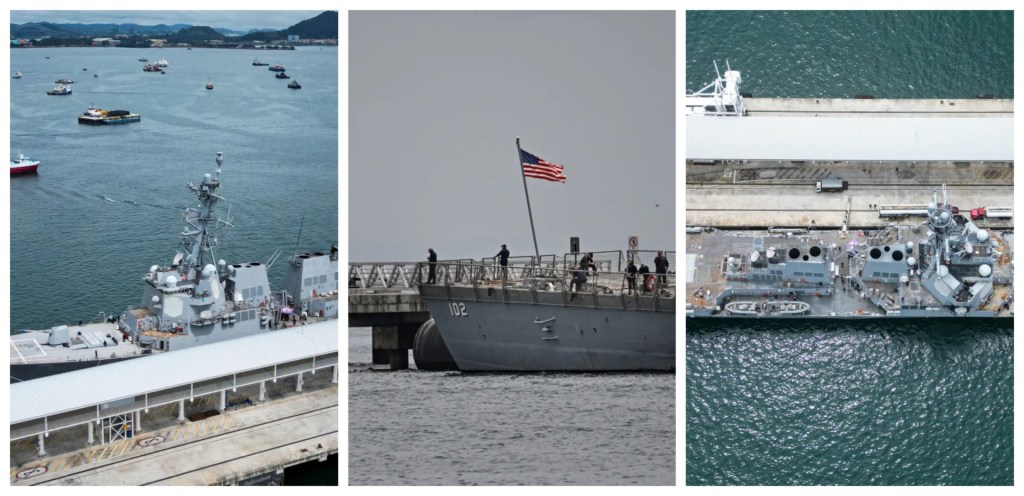
Collection: U.S. Lethal Strikes on Suspected Drug Traffickers, Operation Southern Spear, Operation Absolute Resolve
Collection of expert analysis on the legality of the U.S. strike on Venezuelan vessels in the Caribbean, the consequences of the strike, and related issues.

In the Russia-Ukraine War, Does Trump Know How to Play Cards?
President Trump is giving up influence with his Ukrainian counterpart, Volodymyr Zelenskyy, while seriously underplaying his hand with Russia's Vladimir Putin.

Twenty-Five Years After 9/11, It Is Time to Repeal the 2001 Authorization for Use of Military Force and End the Forever War
Successive administrations have stretched the AUMF beyond any reasonable interpretation to wage worldwide war, without foreseeable end.
3,621 Articles

Prize Courts Are Still Good Law. That Doesn’t Make Them a Good Idea.
The proposed revival of prize courts to seize Iranian oil vessels rests on a misunderstanding of the courts' historical purposes and the nature of modern naval warfare.

Hope – and Vigilance – on the Road to a Crimes Against Humanity Treaty
Proponents of a crimes against humanity treaty will need to redouble their efforts to shore up the support necessary to ensure it is strong and effective.

Guantanamo Dispatch: All Four Defendants’ Confessions Are Now Suppressed in the 9/11 Case
A military judge on Wednesday threw out the last disputed confession in the case against the suspected 9/11 plotters at Guantanamo Bay.

The 9/11 Military Commission and Lessons of Recent History
The rulings that the accused 9/11 plotters' confessions are inadmissible are a reminder that the U.S. government fares better when it abides by the law.

A Better Path for Peace and Security? Focus on Dignity.
Efforts to end wars and protect civilians could benefit greatly from a renewed commitment to the near-universal value of dignity.

Just Security’s Artificial Intelligence Archive
Just Security's collection of 100+ articles analyzing the implications of AI for society, democracy, human rights, and warfare.

How to Better Enforce the Darfur Arms Embargo
Rather than expand the arms embargo on Darfur, the UN Security Council should take steps that would give the existing embargo teeth.

Just Security’s Climate Archive
A catalog of articles analyzing the diplomatic, political, legal, security, and humanitarian consequences of the international climate crisis.

Guantanamo Dispatch: Another Confession Is Ruled Inadmissible in 9/11 Case
A military judge has thrown out the confessions of Mustafa al-Hawsawi, a capital defendant in the 9/11 case at Guantanamo Bay.

Timeline of Boat Strikes and Related Actions
A timeline that chronicles major events in the Trump administration’s campaign of lethal strikes against suspected drug traffickers in the Caribbean and Eastern Pacific.

Under the Gaza Peace Plan, Who Is Responsible for the Treatment of Protected Persons and What Does That Require?
An analysis of the obligations that the Board of Peace and International Stabilization Force must fulfill with respect to the civilian population of Gaza.

The Just Security Podcast: What Happened at the 2026 UN General Assembly?
Daniel Forti and Mariea Sekijima join Viola Gienger to discuss the most important developments from the 2026 UN General Assembly.