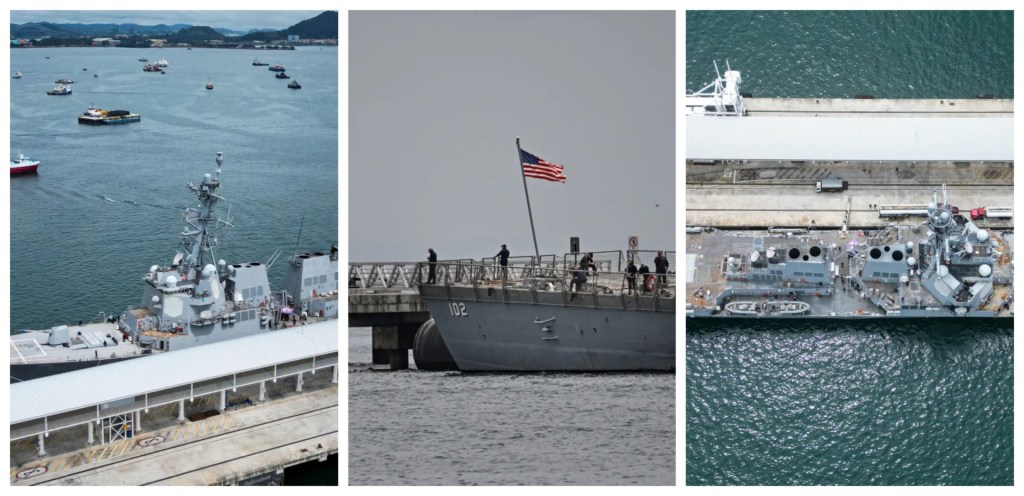
On Sept. 2, 2025 U.S. forces launched a missile strike against a suspected drug vessel in the Caribbean. Forty-one minutes later, they fired again—this time at two survivors clinging to the destroyed boat’s wreckage. The administration justifies these strikes by claiming the United States is in armed conflict with “narco-terrorists,” making the attacks lawful under the laws of war.
This rationale fails on every level. Drug interdiction has been a law enforcement mission since the Reagan administration, not warfare—despite this administration’s attempt to relabel criminal organizations as military enemies. Leading legal experts, including Mike Schmitt, Geoff Corn, Ryan Goodman, and Tess Bridgman, have forcefully argued that we are not in armed conflict with drug traffickers, and the threat they pose must lawfully be addressed through law enforcement, not lethal military operations.
I agree. But even if we accepted the administration’s deeply flawed premise that we are at war, the second strike—targeting defenseless survivors floating in the water—violated fundamental laws of war. These survivors were shipwrecked persons, hors de combat, entitled to protection and rescue, not attack.
Whatever may have been the legal advice in the moment of the strike, it should be clear to those doing any after-action analysis that it was clearly illegal and not close to what Secretary of Defense Pete Hegseth has repeatedly called the “correct decision.”
Why This is Peacetime Law Enforcement, Not War
Simply put, despite labeling these groups “narco-terrorists,” maritime drug interdiction remains a peacetime law enforcement mission, squarely within the longstanding responsibilities of the U.S. Coast Guard. International law, including the law of the sea and international human rights law, govern these operations, not the law of armed conflict, which might allow for lethal operations.
As a policy matter, there is good reason the use of non-lethal force works well in this context: even the U.S. military, which possesses the best intelligence capabilities in the world, can make mistakes and target the wrong people. The U.S. Coast Guard’s own statistics on its boarding operations support the need to take a more measured, law enforcement approach—21% of all vessels stopped by the Coast Guard off the coast of Venezuela between Sept. 1, 2024 and Oct. 7, 2025 possessed no drugs. Sometimes these vessels are piloted by drug traffickers, and sometimes they are just fishermen. We never know until the vessels are boarded and searched. When we strike first and ask questions later, the evidence and actionable intelligence that we could learn are lost forever.
The Duty to Rescue Under Peacetime Law
Customary international law has long recognized the affirmative obligation to render assistance to persons in distress at sea. This obligation is so powerful and so fundamental to the law of the sea that the right to render assistance allows a foreign vessel to enter another nation’s territorial sea to render emergency assistance to those in danger or distress. In fact, the rescuing vessel does not even need the express permission of the coastal state if it is rendering assistance to a vessel in distress.
This duty to render assistance is further memorialized in the 1958 Geneva Convention on the High Seas, the 1974 International Convention for the Safety of Life at Sea, and Article 98 of the 1982 UN Convention on the Law of the Sea. U.S. Navy Regulations, Coast Guard Regulations, and the U.S. Navy Commander’s Handbook on the Law of Naval Operations reinforce this duty to render assistance, requiring commanding officers to proceed with all possible speed to render assistance to any person found at sea in danger of being lost.
What if a commanding officer fails to comply with Navy or Coast Guard Regulations? Both are lawful general orders under Article 92 of the Uniform Code of Military Justice, and failure to comply and render aid opens the door to potential prosecution at court-martial. There is precedent for holding commanding officers accountable for failure to render assistance. In 1988, the commanding officer of the USS Dubuque was court-martialed for failing to give adequate assistance to 80 Vietnamese refugees adrift in a dilapidated junk in the South China Sea.
But even if we accepted the administration’s deeply flawed premise that we are at war, the second strike—targeting defenseless survivors floating in the water—violated fundamental laws of war. These survivors were shipwrecked persons, hors de combat, entitled to protection and rescue, not attack.
Even Under the Laws of War, This Strike Was Unlawful
But the administration is putting forth a different rationale, invoking a separate legal paradigm—the law of armed conflict (LOAC). Even under this (deeply mistaken) invocation of LOAC, the justification to strike the shipwrecked survivors fails. As my colleague Geoff Corn has noted, this is an attempt to push a square legal peg into an operational and factual round hole.
For the sake of argument, let’s assume—purely hypothetically and against all evidence and legal justification—that the United States is in a non-international armed conflict with so-called “narco terrorist” groups. If true, the LOAC would apply. Applying LOAC to the facts in the Caribbean is inherently strained. Nothing about this situation resembles the circumstances LOAC was designed to govern. The law of naval warfare contemplates engagements between warships in armed conflict—not missile strikes against small civilian drug vessels operated by traffickers. Nevertheless, I will proceed with a LOAC analysis of the situation below, beginning with the meaning of “shipwrecked” under that body of law (which, again, clearly does not apply despite the administration’s claims to the contrary).
The Sept. 2 Strike Survivors Were “Shipwrecked” Under International Law
“Shipwrecked” is quite a broad term under both international law and U.S. military doctrine. It encompasses both civilian and military personnel who are in peril and clearly applies to the two survivors of the Sept. 2 strike.
The 1949 Second Geneva Convention for the Amelioration of the Condition of Wounded, Sick and Shipwrecked Members of the Armed Forces applies in armed conflict. The United States is a party, and Article 12 of the Convention defines “shipwrecked” to encompass those imperiled by shipwrecks “from any cause,” including forced aircraft landings at sea. The 1977 Additional Protocol I to the Geneva Convention expands the definition of those who are “shipwrecked” to encompass “persons, whether military or civilian, who are in peril at sea or in other waters as a result of misfortune.”
The U.S. Navy’s Commander’s Handbook on the Law of Naval Operations reinforces this broad definition of shipwrecked persons, to include “those in peril at sea or in other waters as a result of the sinking, grounding, or other damage to a vessel in which they are embarked.”
Bottom line and as a baseline of applying the law to the facts: the two survivors of the first boat strike on Sept. 2 meet the definition of “shipwrecked” personnel under the laws of war.
Shipwrecked Persons Are Protected as Hors de Combat
Shipwrecked persons are generally considered hors de combat (French for “out of combat”) and protected from attack. The obligation to protect shipwrecked persons out of combat is included in Common Article 3 of the Geneva Conventions, fundamental rules that apply in non-international armed conflicts (NIACs), which the administration claims the United States is presently engaged in. The U.S. Supreme Court has already opined that Common Article 3 protections broadly apply to U.S. military operations that qualify as such.
Furthermore, the Geneva Conventions, Additional Protocol I, and the DoD Law of War Manual all state that people incapacitated by wounds, sickness, or shipwreck have protected status. The Manual explains: “Persons who have been incapacitated by wounds, sickness, or shipwreck are in a helpless state, and it would be dishonorable and inhumane to make them the object of attack.” Shipwrecked personnel may be detained, but they may not be intentionally attacked.
Indeed, reports indicate the survivors had no weapons or communication devices at the time of the second strike, were clinging to debris, and were in danger of drowning—classic indicators of hors de combat status. And the principle of humanity—central to the law of armed conflict and reinforced in the DoD Law of War Manual—requires protecting enemy wounded, sick, and shipwrecked personnel. Indeed, it is the very origin story of the modern laws of war and the International Committee of the Red Cross starting from the battle of Solferino in 1859.
The Military Had a Duty to Render Assistance
The U.S. Navy/Marines/Coast Guard Commander’s Handbook on the Law of Naval Operations requires forces to take all possible measures, consistent with their own security, to search for and rescue shipwrecked personnel. It states: “following each naval engagement at sea, the belligerents are obligated to take all possible measures, consistent with the security of their forces, to search for and rescue the shipwrecked.” The DoD Law of War Manual reaffirms that in all circumstances, the wounded, sick, and shipwrecked shall be treated humanely and shall receive, to the fullest extent practicable and with the least possible delay, the medical care and attention required by their condition.
Nothing currently indicates that rescuing these two individuals posed any concrete risk to U.S. forces, which are heavily deployed across the region.
Does the customary and treaty-based duty to render assistance in UNCLOS, SOLAS, and customary international law evaporate? Not necessarily. The outbreak of hostilities does not necessarily suspend UNCLOS and other established protections. Article 17 of Additional Protocol I to the Geneva Conventions specifically authorizes the “civilian population and aid societies” to collect and care for shipwrecked personnel, suggesting that the duty to render assistance is not automatically suspended in wartime. The United States takes the position that treaties like the Geneva Conventions are “lex specialis in relation to treaties providing peacetime norms concerning the same subjects.” However, that is usually on a rule-by-rule basis, and the lex specialis (or more specific rule) displaces the more general but still applicable law only where the two conflict. Here again, the relationship between the drug traffickers and the United States is not a traditional armed conflict between two belligerent powers that would obviate preexisting legal requirements, including applicable U.S. treaty obligations.
Alongside the duty to rescue, the DoD Law of War Manual recognizes “feasible precautions must be taken to reduce the risk of harm to military personnel and objects that are protected from being made the object of attack, such as military personnel placed hors de combat.” Feasible precautions, another obligation of LOAC, could take many forms in this context. It might include Coast Guard or Navy personnel employing non-lethal options to sink the vessel, destroy the drugs without killing the survivors or, simply put, trying to rescue the survivors.
When Shipwrecked Survivors Lose Protected Status
The law of armed conflict for naval warfare is largely focused on two belligerent states using warships to engage in combat, not one military force targeting a civilian drug vessel piloted by drug traffickers. Nevertheless, here are the clear legal standards to help guide the analysis.
Additional Protocol I
First, Article 41 of Additional Protocol I states that a shipwrecked person shall not be made the object of attack “provided that … he abstains from any hostile act and does not attempt to escape.” Merely possessing a weapon or a communication device does not automatically transform a shipwreck member’s status (all pilots, for example, fly with both during combat operations).
Members of Congress who viewed the video of the second strike on Sept. 2 indicate that they saw two shirtless, unarmed survivors without means of communication waving their arms before they were killed, assessments that were reportedly supported by Admiral Frank Bradley and Joint Chiefs Chairman General Dan Caine. These facts do not rise to the level of a hostile act, nor is there evidence that the survivors had any means to escape. The vessel lacked “any means of locomotion,” and there is no evidence that the survivors could communicate, making exigent escape practically impossible. (As noted above, it’s important to reiterate here that the men were not fighters in the first instance, and had no means of fighting to begin with, but this section is assuming for the sake of analysis that LOAC applied and that the men could have been considered hostile at the outset – which is factually unsupported.)
The Geneva Convention Commentary on Small Vessel Operations
The commentary to the Second Geneva Convention is especially stringent for small-vessel naval operations, placing even higher protections for patrol craft and other small craft. The commentary stresses that attackers must be alert to the moment when a small vessel ceases all hostile acts. At that point, all attacks must stop. It states, in full:
In the case of naval operations involving small vessels and few people, attacking forces are able – and are therefore obliged – to be attentive to the moment when a wounded, sick, or shipwrecked person ceases all acts of hostility. In the midst of hostilities, a combatant’s status may change within seconds from being a lawful target to being a protected person by reason of wounds or distress at sea. Therefore, the attacking force must be alert to the possibility that an injured or shipwrecked combatant will cease hostile acts and, accordingly, suspend or cease an attack at any moment. The visible abandonment of all hostile acts by a wounded or shipwrecked combatant must put an end to all hostile acts against that person.
So the commentary places a duty on the “attacking force” to immediately stop attacking shipwrecked or wounded people if there is visible abandonment of all hostile acts.
This is yet another reason why the American public needs to see the second video—we have 41 minutes of video evidence (the time between the first and second strike). Two lawmakers stated that the survivors waved to a U.S. aircraft in an apparent plea for help—a visible abandonment of all hostile acts (recall, on the actual facts and law underlying this strike, the men were engaged in no hostile acts to begin with). You do not need to be a lawyer to conclude that waving or attempting to right-size a destroyed boat without propulsion does not constitute a “hostile act” against the United States within any sense of the words.
The U.S. Navy Handbook on the Law of Naval Operations
Second, the U.S. Navy Handbook on the Law of Naval Operations reiterates the AP I guidance and goes further:
Shipwrecked persons do not include combatant personnel engaged in seaborne attacks who are proceeding ashore, unless they are clearly in distress and require assistance. They qualify as shipwrecked persons only if they have ceased all active combat activity.
Again, we run into applying a legal square peg into an operational round hole. It is unclear how, exactly, a drug trafficker can engage in a combat activity, and in turn, provide evidence of cessation of that activity. Even in the imaginary world in which this was an armed conflict and taking drugs to market in Europe or Africa were war-sustaining operations, even getting back on a fully operational drug boat would not be combat activity, and the people transporting the drugs would qualify as civilians who were not taking part in hostilities.
The DoD Law of War Manual
Third, the DoD Law of War Manual sets forth a slightly different test to explain when shipwrecked personnel lose their protected status and may be lawfully targeted. It states that “shipwrecked persons must need assistance and care, and they must refrain from any hostile act.” “Hostile act” is not clearly defined in the Geneva Conventions. Yoram Dinstein, a widely respected international scholar, notes that persons hors de combat commit a hostile act when they are “still participating in the battle action.” But drug traffickers do not engage in battle, and the analysis above applies.
Historical precedent is also unfavorable to the administration. The WWII Peleus case flatly rejected a German U-Boat commander’s claim that shipwrecked survivors could be targeted due to possible signaling capability.
The San Remo Manual
The influential San Remo Manual on International Law Applicable to Armed Conflicts at Sea discusses shipwrecked persons in life rafts and lifeboats. While there is no evidence that the small drug vessel had any life raft, the commentary helps provide context to shipwrecked survivors. It states:
It is irrelevant that the persons concerned may be fit and therefore possibly in a position to participate in hostilities again, for attacking them would be a war crime. On the other hand, this protection ceases if they actually start committing hostile acts again.
The Administration’s Arguments Fall Short
The Department of Defense seems to be making four arguments justifying the second strike. Each falls short.
Argument One: The Drug Boats Are Lawful Military Objectives
First, the Department appears to be arguing that the drug boats are lawful military objectives. But the DoD Law of War Manual states that military objectives “include any object which by its nature, location, purpose or use makes an effective contribution to military action and whose total or partial destruction, capture, or neutralization … offers a definite military advantage.” The United States gains no articulable military advantage from targeting these drug boats that are led by gangs or cartels and that are not involved in military action against the United States. (See Schmitt, Bridgeman, and Goodman for further analysis.)
Argument Two: The Strike Targeted the Drugs, Not the Survivors
Second, the military is arguing that the second strike was not an attack on the survivors per se, but an attack on the drugs themselves. Admiral Bradley reportedly explained that he ordered the second strike “to destroy the remains of the vessel … on the grounds that it remained afloat and still held cocaine.” The survivors were collateral damage, the reasoning goes, to the otherwise lawful attack on the drugs. But to qualify as a lawful target, the drugs must be a “war-sustaining object” and “support and sustain the belligerents’ warfighting capability.” This tenuous argument appears to be based on the still-unreleased OLC opinion justifying the action.
But as Mike Schmitt, Tess Bridgeman, and Ryan Goodman astutely noted earlier this week, the boats and drugs are not war-sustaining objects because there is no war to sustain. Drug sales flow back to enrich criminal enterprises, not fund arms to be used against U.S. military forces in the region or to conduct military hostilities in or against the United States.
Argument Three: The Attack Satisfied Proportionality Analysis
Third, even if we accepted that these attacks were valid military objectives that were war-sustaining (they are not), we would still need to perform a proportionality analysis. To be lawful, these attacks must provide a direct and concrete military advantage that is not excessive compared to the harm they inflict on the shipwrecked survivors. The military advantage is not clear at all—the survivors were floating in the water for 41 minutes without communications capability to escape or “return to the fight.” It is inconceivable to me that there is any incremental “military advantage” gained from destroying any drugs that may have still been present (apparently, none were visible at the time), even in an imaginary armed conflict scenario. But even if there were such an incremental military advantage in destroying possibly remaining cocaine bound for Europe and sinking the already inoperable vessel, it surely would have been outweighed by the deaths of two shipwrecked survivors.
Argument Four: The Survivors Could Have “Returned to the Fight”
Fourth, Admiral Bradley noted that the “survivors could hypothetically have floated to safety, been rescued, and carried on with trafficking the drugs.” But this justification to attack the shipwrecked survivors could be used against any shipwrecked survivors (to include American servicemembers) now and in the future to eviscerate hors de combat protections.
Hypothetically, the ocean currents could float any shipwrecked survivor back to safety, where they could hypothetically take up arms again sometime in the future. This is a textbook example of reverse engineering the legal justification in such a manner that expands the exception beyond all recognition, swallowing the stated rule. The fact that the admiral would state such a justification is a worrisome sign of how weak the legal reasoning has been.
The Context Matters
Finally, the Sept. 2 strike was the first kinetic strike against drug traffickers in the Caribbean. This strike marked a significant departure from over 40 years of maritime law enforcement operations against drug traffickers. We don’t know if the shipwrecked survivors even saw the missiles before they impacted the boat and killed the other alleged traffickers. They might have thought they had a catastrophic engine failure or accidentally hit a floating munition.
The two survivors were likely in a state of extreme shock and were likely suffering from injuries after their boat was blown apart in international waters (including from the soundwave blast). What were they thinking following the strike? We will never know for sure. It has been reported that the survivors were waving, in a possible sign of seeking help. There is no reason to believe that the two remaining survivors were even aware that they were struck by a military drone—why would they believe that a U.S. military force would preemptively attack them? How would they even know that trying to rightsize the remaining wreckage to survive might mark them as a target?
Conclusion
The Sept. 2 strike against shipwrecked survivors marks a dangerous departure from established international law and decades of U.S. maritime practice. The legality of this action does not actually depend on the administration’s claim that the United States is in armed conflict with drug traffickers—a position that finds no support in international law, state practice, or the factual circumstances in the Caribbean. It would be clearly illegal either way. Yet here we are. As my colleague Geoff Corn noted, “The real problem here is the dubious and legally overbroad assertion that the United States is justified in using wartime authority against a criminal problem.”
Even accepting this flawed premise for the sake of argument, the strike fails under the laws of armed conflict. The two survivors were shipwrecked persons, hors de combat, clinging to debris without weapons or means of escape. They were entitled to protection and rescue, not attack. The administration’s arguments require stacking legally unsupported inferences—that transporting drugs constitutes armed conflict, that traffickers are combatants, that helpless and unarmed survivors posed an imminent threat—to justify an action that would have been unthinkable under four decades of Coast Guard operations.
The broader implications are deeply troubling. If the administration’s legal theory prevails, it transforms routine law enforcement operations into armed conflict, strips away protections for vulnerable persons at sea, and abandons the duty to rescue that has anchored maritime law for centuries. It also endangers U.S. servicemembers and mariners who rely upon these legal protections. This precedent, if left unchallenged, threatens to erode fundamental humanitarian protections in contexts far beyond drug interdiction.
Yet, the Secretary of Defense has said in retrospect the strike was the “correct decision,” and that the military made no changes to its procedures or protocols since.
The American people and their representatives in Congress deserve answers. The administration must release the full Office of Legal Counsel opinion(s) underlying Operation Southern Spear, the intelligence underlying the strike, the Strike Bridge message communications and chat, all relevant videos, and initiate a bipartisan, congressional investigation. Until then, this action stands as what it appears to be: a manifestly unlawful attack on defenseless persons that violates both the letter and spirit of the laws of war and the laws of peacetime law enforcement.